October 2014
Islington North, and Islington South and Finsbury. Two constituencies. Two Labour MPs. But how similar are they really? Jeremy Corbyn, 65, has been representing Islington North since 1983. Emily Thornberry, 54, has been representing Islington South and Finsbury since 2005. Both have three children, both campaigned against the war in Iraq. But during a much shorter time in parliament, Emily Thornberry has risen much quicker within the party.
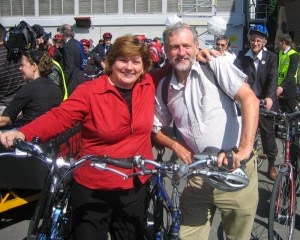
Jeremy Corbyn got his start in national politics during the years of Kinnock vs Thatcher, Thornberry entered parliament during the premiership of Tony Blair, once the Iraq War was already up and running. Not being one of the initial “Blair Babes” from the 1997 election, she has risen quickly since she became an MP in 2005 and is now the shadow attorney general and member of a future Labour cabinet. Some of her interests are the environment and equality, issues that are getting more attention by the second, as more and more people realise their importance. Jeremy Corbyn, on the other hand, has been working for causes based far outside the borough of Islington, and far outside what you would consider the middle ground of politics. He is a member of Amnesty International, he supports the campaign for nuclear disarmament, a united Ireland, and he has campaigned against the conflict in Gaza and Israel, supporting the Palestine solidarity campaign. He also has a weekly column in the Morning Star and has called to lift the UK ban on the Liberation of Tigers of Tamil Elan, a registered terror group by the EU.
On a national level, politics might seem more polarized than ever, but it might just be what the parties want you to think. “Labour and the Conservatives would regard their supporters as being polarized because their supporters would either be on one side of the fence or the other. However, in reality, I think those two parties are grouped together very closely in the centre ground”, says political historian Alun Wyburn-Powell. Jeremy Corbyn is definitely not in the centre ground. He’s on the left flank of the Labour Party, being a member of the Socialist Campaign Group. Since 2005, Jeremy Corbyn has defied the chief whip 148 times, making him one of the most rebellious Labour MPs, while Thornberry has mostly voted with the whip.
Labour’s move towards the middle with “New Labour”, has most certainly benefited Thornberry more than Corbyn who in 2001 won a beard of the year award, a beard he said he wore as a form of dissent against New Labour. However, it’s implausible that he grew the beard specifically to annoy a smooth-faced Tony Blair, as you will struggle to find a picture of Jeremy Corbyn where he is cleanly shaven. He’s not a sore loser, at least not on Twitter.
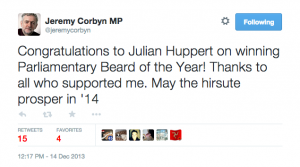
Sadly, Emily Thornberry has never grown a beard to make a point.
Thornberry is the former chair of the All-Party Parliamentary Cycling group and current vice-chair of the All-party Parliamentary Pro-Choice and Sexual Health Group, which hardly screams controversy since even a conservative Prime Minister will have no quarrel getting behind it.
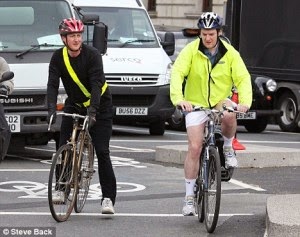
Since the departure of Gordon Brown, Labour has once again taken a turn to the left. Ed Miliband won the leadership in 2010, beating his brother David, seen as the more right-wing of the two and seen as slightly “Blairish”. Ed won with the help of the unions, they liked his left-wing stance. If anyone within the Labour party was opposed to this, Jeremy Corbyn would not have been one of them.
Something that has been heavily discussed the closer to the general election we get is whether or not Ed Miliband has prime ministerial qualities. It is generally accepted that Labour has got an ‘Ed Miliband problem’. “Ed Miliband is not unpopular amongst everybody and I think if you’re a graduate living in modernised, urban seats, fairly mixed local population, a lot of the things he says probably makes a lot of sense and resonates quite well,” says Wyburn-Powell. This is the kind of constituency where Corbyn has managed to hold his seat for the last 31 years, despite being more to the left than “Red Ed” himself.
Getting support from voters as a Labour MP in inner city London is one thing, it’s another to be promoted to the front bench and expected to say the ‘right’ things when the national press knocks on your door. And when it comes to that, Thornberry seems to have grasped ‘how to succeed in politics while actually trying’, while Jeremy Corbyn is stuck fighting for the right things, but not in the right way.
Their electoral results tell one story. Corbyn won in 2010 with a majority of 12 401 votes. Thornberry managed to win by 3 569 votes.
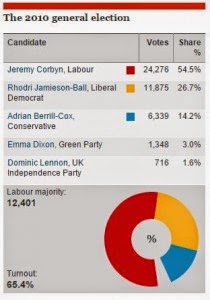
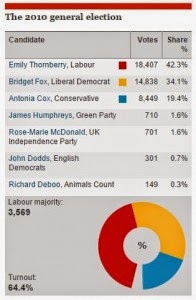
Their places in the House of Commons, however, tell another.

 Gustaf Kilander